How a Psychologist in Singapore Can Help With Anxiety, Burnout, and Trauma

Many people in Singapore push through anxiety, exhaustion, and painful memories for years before seeking help. Life here is fast-paced, the pressure is real, and asking for support from a psychologist in Singapore can still feel like an admission of weakness. But struggling in silence rarely makes things better.
At Benjamin Psychological & Therapeutic Services, we work with individuals who have reached a point where they want a different kind of support. Our role is to provide structured, ethically grounded psychological care.
Key Takeaways
Anxiety, burnout, and trauma are distinct conditions that each require a tailored approach.
A psychologist uses structured, evidence-based methods that go beyond general advice or self-help resources.
Starting therapy does not require a referral or a crisis. Many people begin simply because they want to feel better.
The sooner you address these concerns, the less they compound over time.
Why More People in Singapore Are Seeking Psychological Support
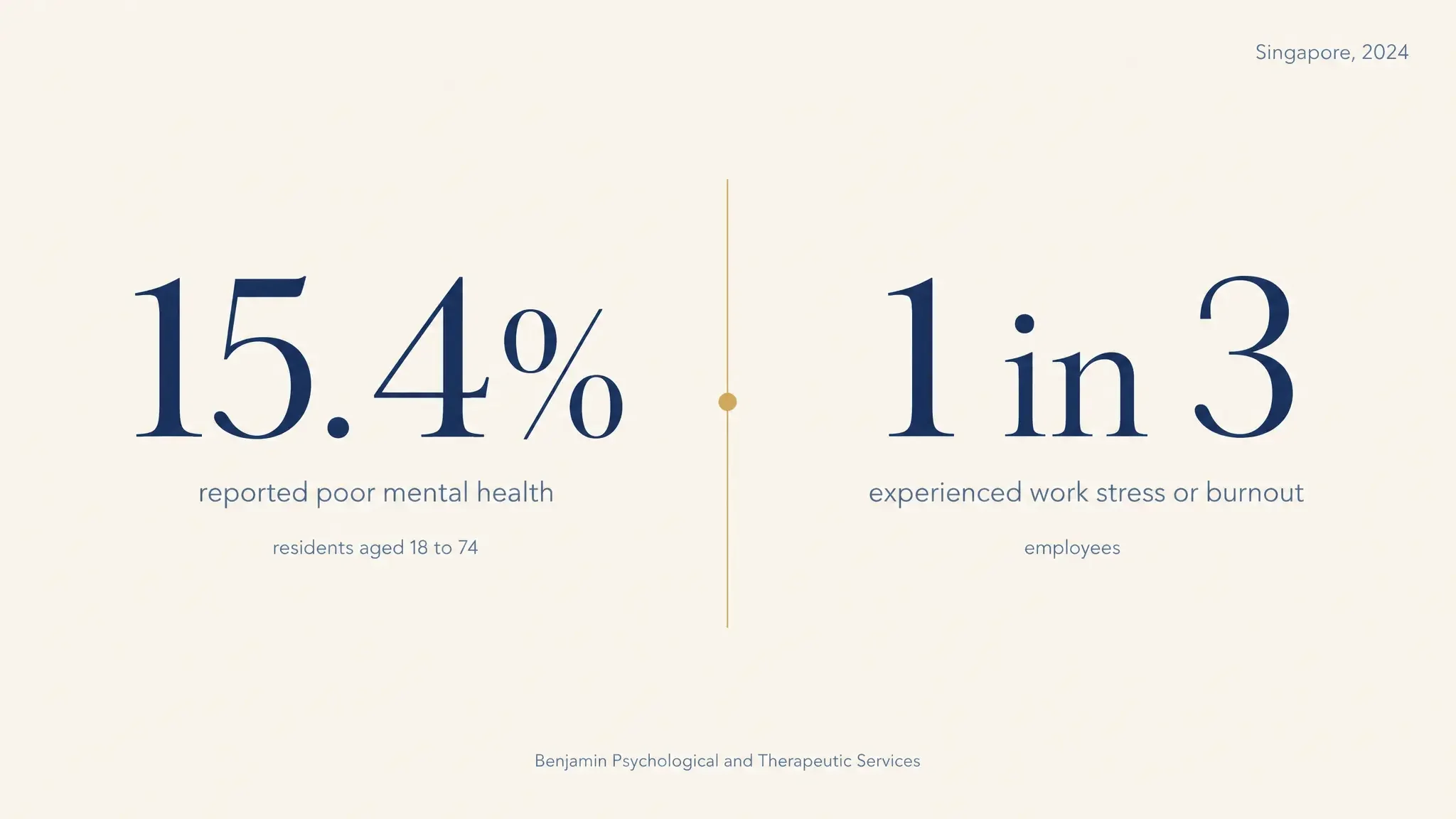
Awareness of mental health in Singapore has grown significantly in recent years, and so has the number of people actively seeking support. The data reflect a population that is under real pressure.
These are not just numbers. They represent professionals missing deadlines because they cannot concentrate, parents snapping at their children when they feel nothing inside, and people lying awake at 3 am running through the same fears on repeat.
Understanding what is actually happening is the first step to addressing it effectively.
Anxiety, Burnout, and Trauma: What Makes Each One Different
People arrive at our clinic with a label they have given themselves. They can easily say they're stressed, burnt out, anxious, without a clear picture of what is actually driving their experience.
We understand these three conditions often overlap and are frequently confused. To understand it better, here is a quick comparison:
| Condition | What It Feels Like | Common Triggers |
|---|---|---|
| Anxiety | Persistent worry, physical tension, difficulty switching off | Performance pressure, uncertainty, relationships |
| Burnout | Emotional exhaustion, detachment, reduced performance | Chronic overwork, lack of control, poor boundaries |
| Trauma | Flashbacks, numbness, hypervigilance, avoidance | Past or ongoing distressing events |
The overlap can make self-diagnosis unreliable, which is one reason working with a psychologist matters. What looks like laziness may be burnout. What looks like sensitivity may be a trauma response. What feels like stress may be an anxiety presentation that responds well to structured therapy.
What a Psychologist Actually Does in Sessions

A psychologist is not just someone you vent to. Sessions are structured, goal-directed, and grounded in research-based approaches.
At BenjaminPTS, we draw on a range of modalities depending on what each client needs:
Cognitive Behavioral Therapy (CBT)
Practical and skills-based. CBT helps you identify thought patterns that keep you anxious, exhausted, or stuck and teaches you how to change them. It is commonly used in clinical practice for anxiety-related concerns and burnout-related thinking traps, including perfectionism and catastrophizing.
Psychodynamic Therapy
It is useful when current difficulties may have roots in earlier experiences. Psychodynamic work can offer insight into recurring relational or emotional patterns and how they developed, which often informs how clients and therapists work with those patterns over time.
Dialectical Behavior Therapy (DBT)
Combines cognitive techniques with mindfulness. It is especially helpful for people who experience intense emotional swings or find that their reactions feel disproportionate to the situation.
Trauma-informed Approaches
For those carrying the weight of past or complex trauma, structured methods create the conditions to work through difficult experiences at a pace that feels safe, without flooding you with the very feelings you have been trying to contain.
Art Psychotherapy
For clients who find verbal therapy difficult, including adolescents, those with trauma histories, or individuals with neurodevelopmental differences, art psychotherapy offers an alternative pathway.
Working through image-making and creative expression within a clinical relationship, it draws on psychodynamic and trauma-informed principles to access what conversation alone sometimes cannot reach.
The first session typically starts with an assessment. We ask about your history, current situation, and what you want to change, then work with you to build a plan.
How Do You Know When to See a Psychologist?
In my experience working with clients across Singapore and the United States, the answer is almost always: if it is affecting your daily life, it is worth addressing.
Waiting for things to get worse is a delay that tends to make the work harder later.
Most importantly, you do not need to be in crisis before reaching out. If you are experiencing these signs, it’s maybe time to seek professional help:
Worry or low mood that has persisted for more than a few weeks
Feeling disconnected from work, relationships, or things that used to matter
Sleep that is consistently disrupted by racing thoughts or vivid dreams
A tendency to avoid situations, people, or memories that feel too heavy
Physical symptoms (tension headaches, fatigue, stomach issues) with no clear medical cause
A sense that you have been coping, but barely
Many of our clients at BenjaminPTS come in not because something catastrophic happened, but because they are tired of just getting by.
What Progress Actually Looks Like
Therapy rarely produces dramatic overnight change. What clients more often describe is a gradual shift in how they feel, how they function, and how they relate to the people around them.
| Where clients start | What becomes possible |
|---|---|
| Stuck and getting by | A fuller version of daily life |
| Anxiety that never fully switches off | Anxiety that can be recognized and moved through |
| Work that feels like survival mode | Work that feels purposeful again |
| Sleep is disrupted by racing thoughts | Nights no longer run by racing thoughts |
| Memories that derail the whole day | Past experiences that no longer hold the same grip |
| Disconnected from what used to matter | Relationships that feel safer and more present |
Structured therapeutic support is often what creates the shift. The goal is not a different life but a fuller one.
Ready to Speak With a Psychologist in Singapore?
Whether you are dealing with persistent anxiety, the hollowed-out exhaustion of burnout, or the weight of something that happened years ago, a psychologist in Singapore can offer more than just a listening ear.
At Benjamin Psychological & Therapeutic Services, our team of internationally trained psychologists and psychotherapists, registered with the Singapore Psychological Society and allied professional bodies (ATAS, ANZACATA, APACS, BAAT), works with adults, adolescents, and couples using approaches tailored to the individual.
If you are unsure where to start, we offer a free 20-minute phone consultation. It is a low-commitment way to ask your questions, understand your options, and decide if therapy feels right for you. Get in touch with us here.
Frequently Asked Questions About Seeing a Psychologist in Singapore
Do I need a referral to see a psychologist?
No. You can contact a private practice directly, without going through a GP or specialist first.
How much does it cost?
Session fees vary by provider training and experience. Many insurance policies cover psychological services. Our team does not bill insurers directly; we provide all the documentation you need to file a claim independently. We recommend confirming your benefits with your insurer before your first appointment.
How long does therapy take?
This depends on what you are working on. Focused concerns like a specific anxiety trigger, may resolve in a shorter course of therapy. More longstanding patterns often benefit from longer engagement. Your therapist will discuss this with you as you go. There is no pressure to commit to an open-ended timeline from the start.
Is everything I share kept confidential?
Yes, confidentiality is a core ethical requirement for psychologists registered with the Singapore Psychological Society, with clearly defined exceptions that your therapist will explain at the outset.
Can I do sessions online?
Yes, online sessions are widely available in Singapore. Benjamin Psychological & Therapeutic Services delivers telehealth via a secure, HIPAA-compliant platform, and all client information is handled in accordance with Singapore's Personal Data Protection Act (PDPA). This makes virtual sessions a practical option when travel, childcare, or work schedules make in-person attendance difficult.
Dr. Brian Benjamin, Psy.D.
Dr. Brian Benjamin, Psy.D. — Doctorate in Clinical Psychology, California School of Professional Psychology at Alliant International University, Los Angeles, is a licensed clinical psychologist in California and a supervisor and registered psychologist with the Singapore Psychological Society. He is the Principal Clinical Psychologist at Benjamin Psychological & Therapeutic Services, where he provides psychological assessment and psychotherapy support for children, adolescents, adults, couples, and families.
Dr. Benjamin specializes in child and adolescent psychotherapy, psychological assessment, and play-based interventions for young clients. With training and professional experience in Singapore and the United States, he supports clients in multicultural and international settings, including families navigating emotional, behavioral, developmental, relational, and adjustment-related concerns.