Adult Trauma Symptoms That Often Go Unnoticed—And How Psychotherapy Helps

Trauma does not always look like what people expect. For many adults, it shows up quietly as exhaustion that sleep cannot fix, irritability that strains relationships, or an unshakeable sense that something is wrong but you cannot name it.
At Benjamin Psychological & Therapeutic Services, we work with adults navigating exactly these experiences. This guide is designed to help you recognize the signs, understand what may be happening, and learn how psychotherapy for adults can provide measurable change for many adults.
Key Takeaways
Trauma symptoms in adults are often misattributed to stress, personality, or physical illness, and frequently go unaddressed for years.
Unprocessed trauma keeps the nervous system in a state of chronic activation, affecting mood, relationships, sleep, and physical health.
Evidence-based psychotherapy approaches, such as Cognitive Behavioral Therapy, have a strong track record for trauma recovery.
Healing is possible at any stage of life. The goal of psychotherapy is not to erase the past, but to reduce its grip on the present.
What Counts as Trauma?

A common misconception is that trauma requires a dramatic, single event. It can be a war, a serious accident, or an assault. In reality, trauma is defined by its impact, not its size. It is any experience that overwhelms your capacity to cope and leaves a lasting imprint on how you think, feel, and function.
In Singapore, this can include high academic pressure during formative years, workplace harassment, sudden loss of a loved one, difficult family dynamics, relationship breakdowns, and relocation stress. Childhood experiences of neglect or emotional unavailability, even without overt abuse, can also produce lasting effects that surface in adult life.
How Trauma Shows Up in Adults (And Why It Often Goes Unnoticed)
Because trauma responses develop as survival strategies, they can feel like personality traits rather than symptoms. People often describe themselves as "just anxious," "bad at relationships," or "a worrier," unaware that these patterns may be rooted in unprocessed experiences.
The table below outlines common trauma symptoms across four domains, many of which adults routinely attribute to other causes:
| Domain | Common Signs |
|---|---|
| Emotional | Anxiety with no clear trigger, emotional numbness, sudden anger or sadness, feeling detached from yourself |
| Physical | Chronic pain or tension, persistent fatigue, sleep disturbances, digestive issues, frequent headaches |
| Behavioral | Avoidance of people or places, overworking or perfectionism, difficulty setting limits, substance use |
| Relational | Difficulty trusting others, emotional distance from partners, repeating unhealthy relationship patterns, fear of conflict |
Some patterns that often fly under the radar:
Burnout that does not resolve with rest. Trauma-driven exhaustion is different from ordinary work stress. If you have taken a holiday and still returned depleted, it may point to deeper dysregulation rather than a workload problem.
Perfectionism and overworking as coping. High productivity is widely valued among the professional community in Singapore, which can quietly mask trauma-driven behavior. Overworking to avoid stillness, or setting impossibly high personal standards to feel safe, are common responses to early environments where love or approval felt conditional.
Anxiety that seems unrelated to anything current. If your nervous system learned that the world was unpredictable or unsafe, it may continue scanning for threats even when your present life is objectively stable. This hypervigilance can look like generalized anxiety, social anxiety, or a persistent sense of dread.
The Neuroscience Behind It: Why Trauma Stays in the Body
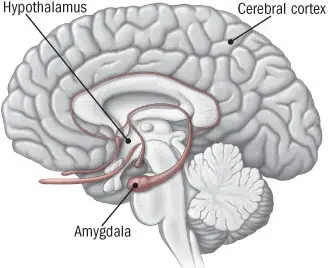
Figure: The brain's command center during a threat response. The amygdala detects danger and signals the hypothalamus, which activates the sympathetic nervous system and triggers the release of adrenaline and cortisol, preparing the body to fight, flee, or freeze. Image from Harvard Health Publishing, Harvard Medical School
Trauma is not just a memory; it is a physiological state. When you experience something threatening, your nervous system activates the fight-flight-freeze response, flooding the body with stress hormones.
In a healthy recovery, this settles. But when trauma is unprocessed, the nervous system can remain in a low-grade state of activation, responding to ordinary situations as though danger is still present.
This helps explain why trauma symptoms can feel so physical. Adults with trauma may experience:
Chronic tension in the shoulders or jaw
a tight chest
difficulty taking a full breath
gut problems
disrupted sleep
These are not separate from psychological trauma. They are expressions of it. Research continues to show that trauma exposure and post-traumatic stress are closely associated with physical symptoms, particularly in adults who have experienced multiple types of trauma over time.
This is also why willpower alone rarely resolves trauma. You cannot think your way out of a nervous system that is stuck in survival mode. Structured therapeutic intervention is often what creates the shift.
How Psychotherapy for Adults Helps
At Benjamin PTS, psychotherapy is tailored to each individual's needs, experiences, and goals. While every person's journey is different, therapy often involves three key stages:
1. Building Safety and Stability
The first step is creating a safe, supportive environment where you can explore your concerns without judgment. We may help you develop practical strategies to manage distress, such as:
Grounding techniques
Emotional regulation skills
Mindfulness practices
Healthy coping strategies
For many adults, learning these tools can provide meaningful relief and a greater sense of control.
2. Understanding Patterns and Experiences
As therapy progresses, you and our therapist will work together to explore the thoughts, emotions, experiences, and relationship patterns that may be contributing to current challenges.
This process can help you:
Identify recurring patterns in your life
Understand how past experiences may influence the present
Develop new perspectives on difficult situations
Reduce the impact of distressing memories or emotions
3. Supporting Growth and Lasting Change
The final focus is on helping you move forward with greater confidence and resilience.
Therapy may support you in:
Building healthier relationships
Strengthening self-awareness and self-esteem
Developing more effective coping strategies
Navigating future challenges with greater confidence
Creating meaningful changes aligned with your goals
Throughout the process, therapy is collaborative and paced according to your comfort, readiness, and individual needs.
Therapeutic Approaches Used at Benjamin PTS
Different approaches work better for different presentations. The most commonly used evidence-based modalities for adult trauma include:
Cognitive Behavioral Therapy (CBT) works to identify and restructure thought patterns shaped by trauma. It is commonly used in clinical practice when anxiety, intrusive thoughts, or avoidance behaviors are present. The American Psychological Association's Clinical Practice Guideline (last updated April 2025) recommends three CBT-family interventions as first-line treatments for PTSD: CBT, Cognitive Processing Therapy, and Prolonged Exposure.
Psychodynamic Therapy explores how early relationships and experiences shape present-day patterns. It is particularly useful for adults with complex or developmental trauma, helping uncover root causes rather than treating only surface symptoms.
Dialectical Behavior Therapy (DBT) is well-suited for those experiencing intense emotional swings or self-destructive behaviors, combining cognitive strategies with mindfulness to build emotional regulation skills.
Mindfulness-Based Approaches help adults reconnect with the present moment and reduce the dominance of intrusive thoughts and memories.
Eye Movement Desensitisation and Reprocessing (EMDR), a structured approach the APA conditionally recommends for PTSD. Offered in-house by our art psychotherapist Chloe Benjamin, who holds advanced EMDR training.
At Benjamin PTS, treatment plans are personalized. We will recommend and adapt the approach based on your specific history, goals, and what feels tolerable at each stage.
When to Seek Help
You do not need a diagnosis or a single defining event to seek psychotherapy. Consider reaching out if:
Symptoms (emotional, physical, or relational) have persisted for more than a month
You notice patterns in your relationships or behaviors that you cannot explain or change on your own
You feel disconnected from yourself or others
Day-to-day functioning is affected, such as sleep, concentration, work, or connection with people you care about
Seeking support early can help prevent difficulties from becoming more entrenched over time. At Benjamin PTS, adults can access psychotherapy directly without a referral, beginning with a 20-minute introductory phone consultation at no cost to discuss their concerns and determine whether therapy is the right next step.
Moving Forward With Psychotherapy for Adults
Trauma can be quiet, cumulative, and easy to rationalize away. But its effects on the body, relationships, and daily life are real, and they tend to compound over time when left unaddressed.
The encouraging reality is that trauma is treatable. Psychotherapy for adults offers a structured, evidence-based path to understanding what happened, regulating your nervous system, and rebuilding a sense of safety and trust that may have been lost.
If any part of this article resonated with you, a good first step is speaking with a professional. Benjamin Psychological & Therapeutic Services offers a 20-minute introductory phone consultation at no cost, allowing you to discuss your concerns before committing to therapy.
Contact us and ask questions, share what you are experiencing, and find out whether our approach is the right fit for you.
Frequently Asked Questions
What is the difference between psychotherapy, counseling, and therapy?
Psychotherapy typically focuses on deeper emotional and psychological patterns using evidence-based approaches, while counseling is often more short-term and focused on specific life challenges. The terms are sometimes used interchangeably, but psychotherapy generally involves more in-depth work on mental health concerns such as trauma, anxiety, and depression. For a fuller picture of what therapists can do for adult mental health concerns, see our clinical overview.
How long does psychotherapy for trauma typically take?
There is no fixed timeline for trauma therapy. Some adults benefit from short-term therapy, while others with more complex experiences may find longer-term support helpful. Your therapist will review progress with you and adapt the treatment plan as needed.
Is it too late to address trauma from my past?
No, it is never too late to address trauma from your past. The brain retains the ability to adapt and change throughout life, and many adults experience meaningful improvements through psychotherapy regardless of when their traumatic experiences occurred.
What can I do between sessions or while waiting to start therapy?
Simple grounding and self-care practices can help manage distress between sessions. Techniques such as the 5-4-3-2-1 grounding exercise, regular movement, consistent sleep habits, and mindfulness practices can support emotional regulation while you await professional support.
Dr. Brian Benjamin, Psy.D.
Dr. Brian Benjamin, Psy.D. — Doctorate in Clinical Psychology, California School of Professional Psychology at Alliant International University, Los Angeles, is a licensed clinical psychologist in California and a supervisor and registered psychologist with the Singapore Psychological Society. He is the Principal Clinical Psychologist at Benjamin Psychological & Therapeutic Services, where he provides psychological assessment and psychotherapy support for children, adolescents, adults, couples, and families.
Dr. Benjamin specializes in child and adolescent psychotherapy, psychological assessment, and play-based interventions for young clients. With training and professional experience in Singapore and the United States, he supports clients in multicultural and international settings, including families navigating emotional, behavioral, developmental, relational, and adjustment-related concerns.