Most children don't say, "I'm anxious about my exams." They say their tummy hurts, they act out, or they go very quiet.
In Singapore's achievement-driven school culture, many children absorb enormous pressure before they even have the language to describe it, and art therapy may be one option to address it.
At Benjamin Psychological & Therapeutic Services, we support children's mental health and emotional well-being. We’ve seen how creative expression unlocks feelings that are hard to explain in words.
This article covers how art therapy helps with school stress and exam anxiety, what sessions look like, and what parents in Singapore should know before getting started.
Key Takeaways
Art therapy is not an art class or free play. It is a therapeutic process in which creative expression may help children explore emotions that are difficult to verbalize.
Research shows art therapy significantly reduces anxiety in children and adolescents, making it especially relevant in Singapore's high-pressure academic environment.
Children don't need any artistic skill or prior experience. The art-making process matters far more than the final product.
The Real Toll of Singapore’s Academic Pressure
Singapore’s academic environment can be demanding for some children.
A 2025 study found that 27% of youths aged 15 to 35 in Singapore showed severe or extremely severe anxiety symptoms, with academic pressure identified as a major contributing factor. Psychologists have seen up to 20% more students seeking help for exam stress every year.
For many children, this pressure builds silently. They may not have the language to ask for help.
That’s where art therapy steps in.
What Is Art Therapy?
Art therapy, or art psychotherapy, blends psychological theory with the visual arts to help people explore and address emotional issues that are difficult to put into words. It’s facilitated by professional art therapists within a therapeutic relationship.
An art psychotherapist is not an art teacher. The focus is never on technical skill or producing a beautiful final piece.
Instead, the art-making process itself becomes a language. Art media like oil pastels, clay, paint, and collage create space for self-expression that verbal expression alone often cannot reach.
Certified art therapists complete extensive training grounded in psychotherapeutic concepts and supervised clinical hours before they sit with a client.
How Art Therapy Helps Children with School Stress and Exam Anxiety
When a child is overwhelmed by upcoming exams or the fear of failure, traditional talk therapy can feel like one more thing they have to perform correctly.
Art therapy may offer a different format for children. It offers a safe, creative, and non-judgmental space where children can process complex emotions at their own pace.
Some research suggests that art therapy may help improve anxiety symptoms in children and adolescents. A separate study found that 75% of participants showed lowered cortisol levels after just 45 minutes of making art, regardless of artistic ability.
Engaging in creative processes, such as sketching or working with clay, can lower cortisol levels. When the stress hormone drops, children may feel more grounded and ready to face school challenges.
Art Therapy Techniques for Stress and Anxiety
Feelings Map. Children assign specific colors to different emotions, building emotional vocabulary and self-awareness around their stress or calm moments.
Clay Molding. Molding clay allows children to physically release tension by shaping their worry and transforming it. It’s a hands-on way to process what feels stuck.
Mandala and Circular Designs. Creating or coloring circular patterns helps children focus on the present moment, fostering mindfulness and reducing test anxiety.
Free Painting and Drawing. Children use paint, drawing, or oil pastels to externalize hidden feelings, such as fear of failure. Giving shape to emotions they struggle to name.
The art-making process teaches children something equally important. It is okay to try, fail, and try again. Successfully creating art can improve a child’s sense of self-worth and control over their lives. This may support self-confidence and self-expression that extends beyond the therapy room.
Who Benefits Most from Children's Art Therapy?
Art therapy helps a wide spectrum of children. But it may be helpful for children with attention deficit hyperactivity disorder (ADHD) or attention deficit disorder. Research shows that children with neurodevelopmental conditions find it easier to express emotions through image-making than through conversation alone.
Children with autism spectrum disorder (ASD) also benefit. Art therapy supports emotional regulation, social skills development, and communication within a safe therapeutic relationship.
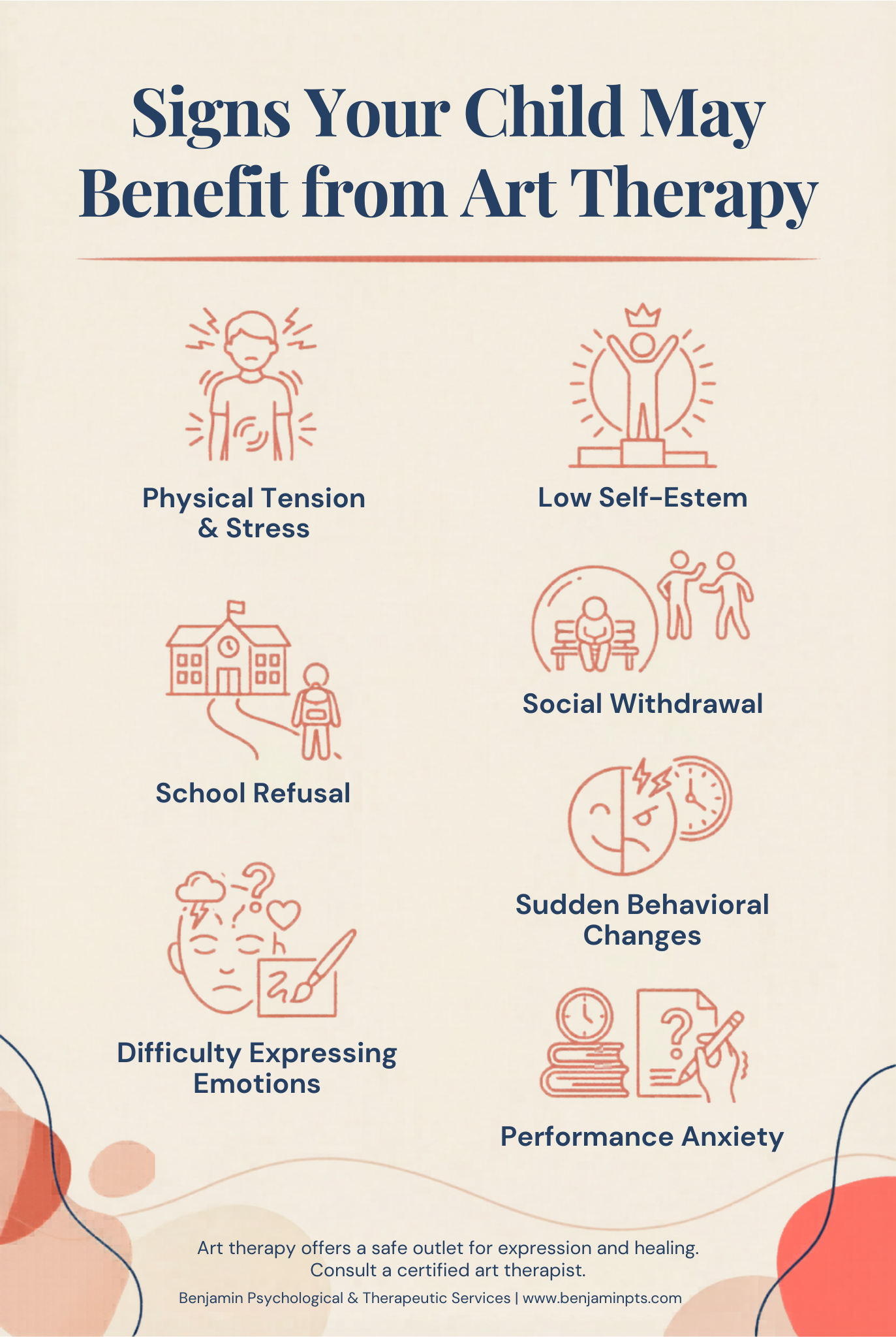
Art therapy also helps children facing behavioral challenges, childhood depression, low mood, or anxiety. This includes school refusal, peer difficulties, and exam-related mental health challenges.
For children with learning difficulties, cerebral palsy, or spina bifida, art therapists work as part of a multidisciplinary team alongside other specialists to support individuals with complex needs. Children managing chronic illness or palliative care also benefit from this approach.
Art therapy even supports older adults with dementia and adults navigating trauma, depression, and other mental health challenges.
Making it a genuinely broad range therapeutic approach used across different age groups and clinical settings.
What to Expect in Art Therapy Sessions
Each session is shaped by the child’s needs. A therapist may offer a prompt like “draw what today feels like” or allow free exploration of the art materials available.
Children might work with clay, oil pastels, watercolors, or collage. The art therapist does not interpret the artwork like a diagnosis.
Instead, the therapist helps the child reflect and engage in self-exploration through dialogue about what they created. The therapeutic process is organic, client-centered, and emotionally safe.
Art created during sessions is kept confidential. This preserves the child’s trust and safety in the therapeutic relationship.
For children whose traditional talk therapy feels tiring, art therapy offers a way to reconnect with themselves. And express what has felt stuck through the act of making art.
Finding the Right Art Therapist in Singapore
Art therapy is one option some families in Singapore consider when a child is struggling with stress, anxiety, or emotional overwhelm.
While some families access art therapy through public hospitals or school-based programs, these services often have long waitlists, limited session availability, or are reserved for specific medical cases.
At Benjamin Psychological & Therapeutic Services, we offer personalized, one-on-one art therapy for children and adolescents in a private practice setting. Our certified art therapists hold master 's-level qualifications and are members of the Art Therapists' Association Singapore (ATAS).
Unlike institutional settings where sessions may be brief or infrequent, we offer:
flexible scheduling
longer session times
Ongoing sessions where appropriate
This is especially important for children dealing with exam anxiety, behavioral challenges, or emotional regulation difficulties.
Are Singapore Art Therapists Qualified?
Yes. Families may wish to ask about a therapist’s training, registration, and professional memberships.
Many art therapists complete master ’s-level training in art therapy or art psychotherapy and complete a supervised clinical practicum before practicing. This master’s level training is grounded in psychotherapeutic concepts and psychological theory.
Families may also ask whether the therapist holds memberships or registrations with relevant professional bodies such as ANZACATA or ATAS.
Art therapists must also undertake continuing professional development to maintain competency. This training differs from the use of creative activities by professionals whose primary role is not art psychotherapy.
When seeking support for your child, it’s worth asking about your therapist’s qualifications and whether they specialize in children's art therapy specifically.
Help Your Child Through the Right Art Therapy in Singapore
Art therapy for school stress and exam anxiety in Singapore children is used as a therapeutic approach in different clinical contexts. It’s an approach that may help some children express and process difficult emotions.
For some children, art-making may offer another way to communicate feelings when verbal expression is difficult.
And when children learn to name their emotions through color, clay, and creative expression, they build coping skills and self-awareness that last long after exam season ends.
If a child is showing signs of school stress, exam anxiety, low mood, or emotional overwhelm, parents may wish to speak with a qualified mental health professional.
Benjamin Psychological & Therapeutic Services states on its website that it offers art psychotherapy and a 20-minute phone consultation for parents seeking more information.